


In 2026, overseas expansion is no longer optional for Chinese computing-infrastructure companies. Three routes are open at the same time, but each plays by a very different set of rules.
Vote first, then let’s discuss:
Three routes for global expansion
- Southeast Asia: the closest and fastest — but also the messiest
- Middle East: the biggest budgets and biggest opportunities — but accessible to only a few
- Europe: the hardest and slowest — but impossible to ignore
■ Southeast Asia: The Closest Market, With the Fastest Route to Returns
Singapore, Malaysia, Indonesia, Thailand and Vietnam together have a population of more than 600 million and a digital economy worth over USD 300 billion, yet computing infrastructure remains insufficient. Chinese companies have several obvious advantages: geographic proximity, greater cultural familiarity, fast construction capabilities and relatively low operating costs. A key data point: Southeast Asia’s data center market was worth about USD 9.5 billion in 2025 and is projected to reach USD 28.5 billion by 2030.
But the market comes with three major pitfalls: complex geopolitics, unstable power supply and shortages of skilled talent.
The practical answer: find strong local partners rather than trying to enter alone.
■ Middle East: The Most Expensive Market — and the One With the Biggest Imagination
Saudi Arabia, the UAE and Qatar are using oil wealth to make large bets on AI. Saudi Arabia has announced USD 100 billion in AI infrastructure investment, while the UAE is implementing its National AI Strategy 2031.
The barriers to entry are also among the highest: geopolitical risk, cultural differences and very different regulatory systems.
This route is best suited to leading companies with meaningful international experience.
■ Europe: The Most Complex Market — but One You Cannot Avoid
Europe’s data-sovereignty rules and GDPR requirements are demanding, yet data center investment in the region grew by more than 40% year on year last year. For many Chinese companies, the better entry strategy is not to build data centers directly, but to export capabilities — design, equipment and operating expertise.
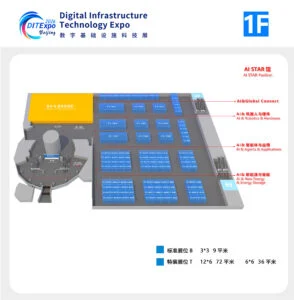
For the first time, DITExpo 2026 will establish a Global Connect zone in the Level 1 AI STAR Hall, supported by three elements: overseas buyer delegations covering Southeast Asia, the Middle East and Europe; an English-language communications matrix spanning LinkedIn, international PR and global media; and one-to-one matching for overseas supply and demand.
See it differently? Leave your view and let’s discuss it together.